
What this is about
In shaping you turn the ripe dough into a loaf: you pull the surface into a smooth skin, and this skin holds the gas in the dough and gives the bread its height. It happens in two moves with a short rest between them: first the preshape, then shaping into a round (a boule).
How to do it
You need a work surface, a bench scraper (a flat piece of plastic or metal), a banneton (proofing basket), and a cloth or a clean bag. Dust the banneton thickly with rice flour or flour before you start.
- 20:30, turn out onto the surface: Dust the work surface lightly with flour. Loosen the dough from the edge of the bowl all the way around with the bench scraper and tip it onto the surface. Its gas should stay in the dough, so do not punch it down.
- Preshape: This is the first, loose move that turns the flat dough into a rough ball. Run the bench scraper under the edge and fold it toward the middle. Go around like this until a loose ball forms. Then slide the scraper under the dough, lift it briefly, and turn it so that the folds are underneath.
- Bench rest, 30 minutes: Cover the ball with a cloth or an upturned bowl and let it rest on the surface. The bench rest is this short pause: the dough gets softer and can be tightened afterward without tearing.
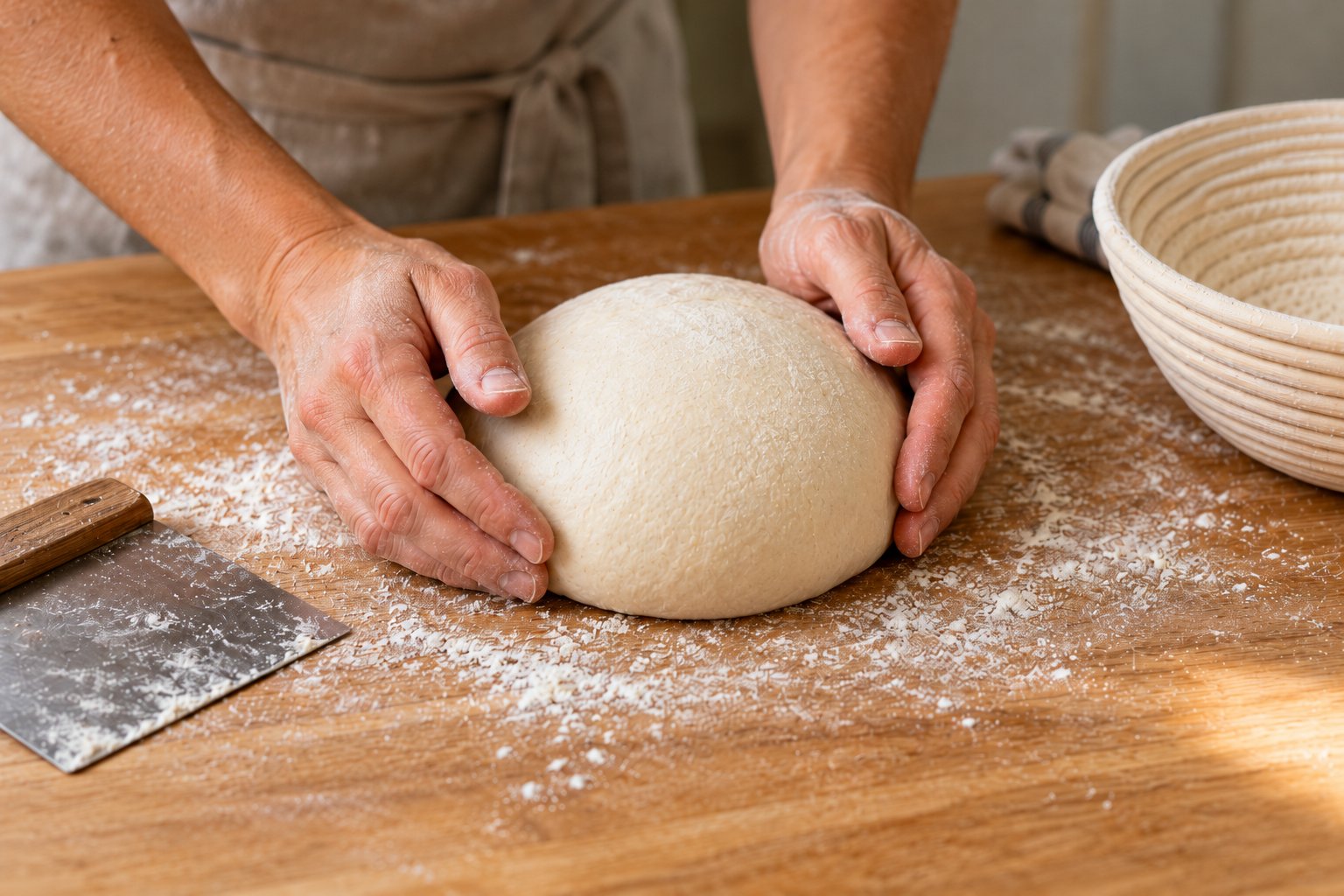
- 21:00, shape into a round: This is the second, firm move. Turn the ball over so that the folds are on top. Fold the edges from the top, the bottom, and the sides toward the middle. Turn the dough over so that the folds are underneath again. Put both hands or the bench scraper against the dough and pull it across the surface in small circles. The friction tightens the surface. Stop when it is smooth and taut.
- Into the banneton: Lift the loaf with the bench scraper and place it in the banneton with the seam up. The seam is the spot with the folds. Dust the surface lightly with flour and cover the banneton with a cloth or a bag. Then it goes into the fridge.
How you know it is right
The loaf has a smooth, taut surface without tears. It holds its shape on the surface, stands round and tall, and does not spread out. When you pull it across the surface while shaping, you feel slight resistance, and the skin does not tear.
If you shaped too firmly, the surface tears, usually on top in the middle. Stop then, cover the dough, and let it rest before you put it in the banneton. If you shaped too loosely, the loaf spreads wide and has no outline. Then shape it again and pull a bit more firmly. Flour the surface as little as possible while you do this, because too much flour makes the dough slide, and what slides cannot be tightened.
If the dough is too sticky, wet your hands instead of taking more flour. If the dough sticks to the bench scraper during the preshape, moisten that too.
Rules to remember
- Flour the surface only lightly: the dough needs friction so you can tighten it.
- Let the ball rest for 30 minutes before you shape it into a round; then the skin does not tear.
- Pull until the surface is smooth and taut, but not until it tears.
In the Pro edition: the long shape, how the bench rest and the relaxing of the dough work together, how to dose the tension, stippling and free-standing loaves, and shaping rye doughs.