
What this is about
The first bread is rarely perfect, and that is normal. Five pictures cover most cases, and every one of these breads is edible.
Hold your verdict until the loaf has cooled, because a loaf cut too early always looks rubbery. Then cut it open in the middle, look at it from the outside and the inside, and find the picture in the table that comes closest to yours. Next time you bake, change only what the last column says. Often two pictures fit at once, because the same cause leaves several traces.

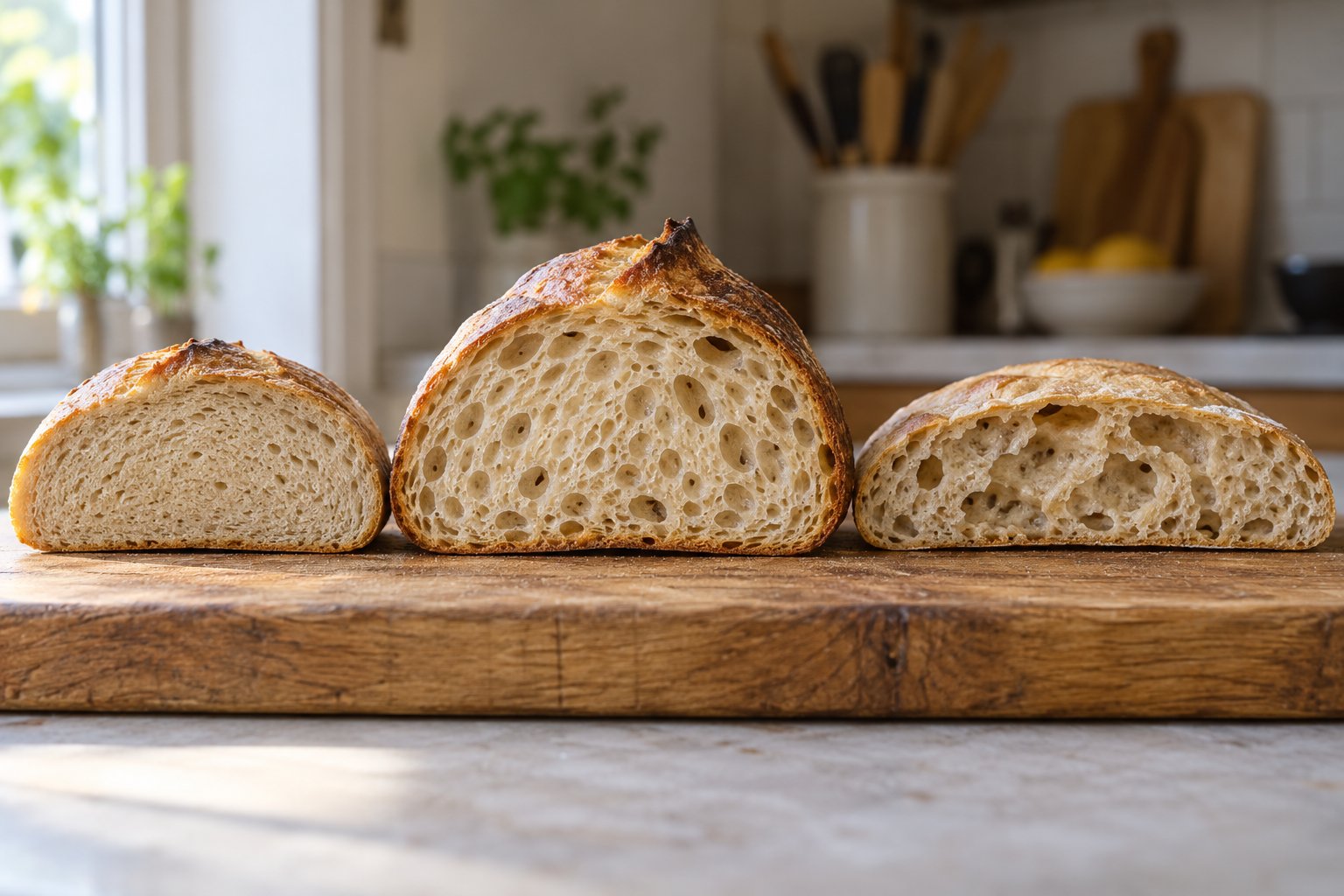
The five most common pictures
| What you see | Likely cause | Next time |
|---|---|---|
| Flat and wide. The loaf spreads in the oven and has little height. | Bulk fermentation was too long, or the dough was shaped too loosely. | Check more strictly at 20:30 whether the dough is ready, and preshape sooner. Shape the dough tighter. |
| Dense, firm crumb with small holes. The bread is heavy. | Bulk fermentation was too short, or the starter was too weak. | Wait for the signs in the dough instead of the clock. Feed the starter daily for two weeks, and only then bake. |
| Large hole under the crust. The crust lifts off, and there is a gap beneath it. | Air or flour was trapped during shaping, or the dough dried out in the fridge. | Smooth out the air bubbles when you preshape, and use little flour. Cover the banneton tightly. |
| Too sour. The bread tastes sharp, almost like vinegar. | The cold retard was too long, or the levain was overripe. | Use the levain at its peak, and do not leave the dough in the fridge longer than 16 hours. |
| Crust pale or burnt. It is light and dull, or it is almost black. | Pale: the oven and pot were not hot enough, or the lid stayed on too long. Burnt: the lid was off too long, or the oven was too hot. | Preheat for an hour and bake 20 minutes with the lid on. Then watch the color, and if needed take the bread out five minutes earlier. |
What you still have
Every one of these breads is edible and tastes of sourdough, even if it does not look good. Toasted, as croutons, or as breadcrumbs, even a failed loaf becomes something good. Write in your notebook what was different from usual, so that you can change it on purpose next time.
Rules to remember
- Go by the dough, not the clock.
- One bread, one change.
- Write down what you did.
In the Pro edition: reading the bread by its width, crumb pictures, rescue tables for every phase, and the typical mistakes with rye.